

The PG National Award is an annual award presented by the P G Samskruthi Kendra to honor distinguished individuals for their contributions to society, particularly in fields like literature, journalism, and social activism. Named in memory of the Marxist philosopher and writer P Govinda Pillai, it was first awarded in 2021 to advocate Prashant Bhushan.
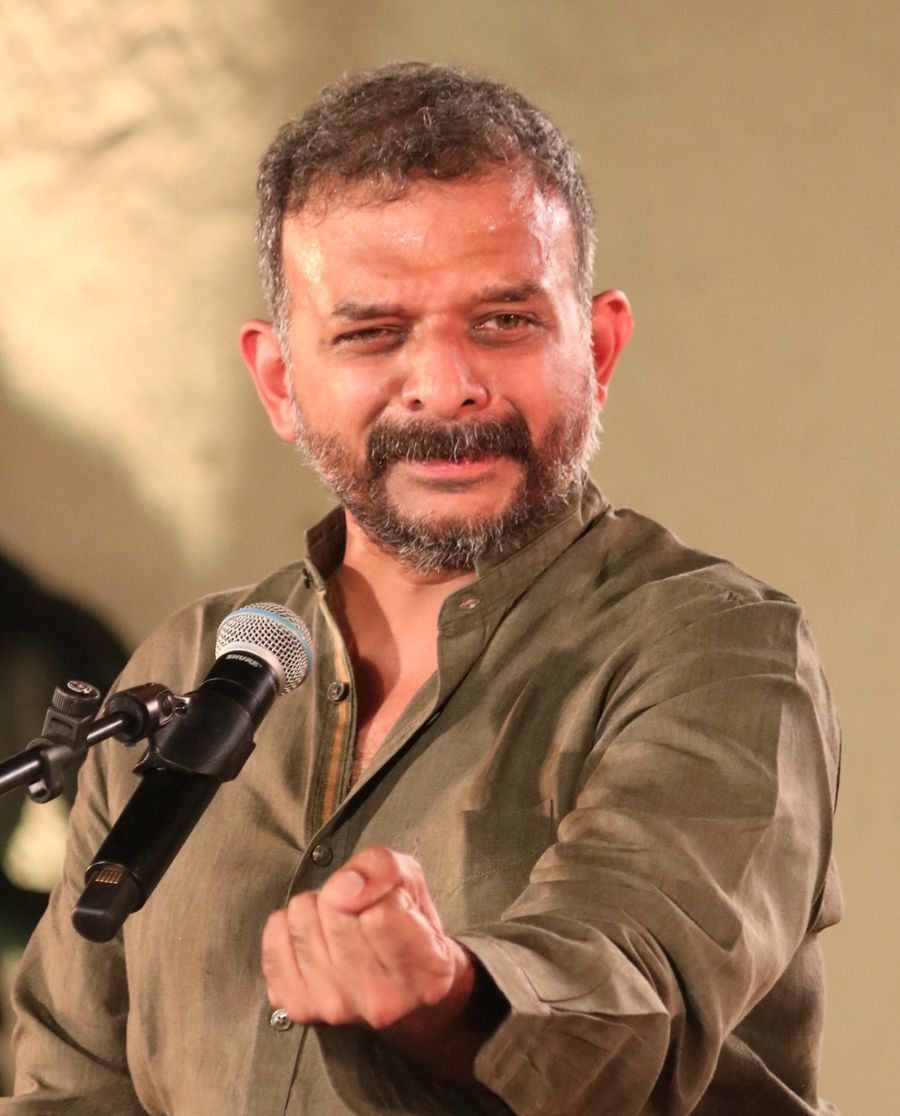
Thodur Madabusi Krishna is among the most accomplished and original contemporary vocalists in Carnatic music, celebrated for both his formidable artistry, deep scholarship and his fearless intellectual interventions in the world of classical music. Trained under Semmangudi Srinivasa Iyer, Krishna’s concerts are noted for their depth, creativity, and emotional intensity. He has consistently expanded the boundaries of Carnatic music beyond its insular, caste-bound confines which makes him a unique public intellectual of our times. Equally acclaimed as a writer and public thinker, Krishna has authored influential and radical works which probe the aesthetic, social, and political dimensions of South Indian classical music. He has consistently challenged the Brahminical and exclusivist traditions of Carnatic music, advocating for inclusivity and the democratization of art. Through his essays, lectures, and activism, Krishna has emerged as a progressive voice on issues of caste, gender, secularism, environment and artistic freedom, making him one of the most distinctive cultural figures in contemporary India. One of the few classical musicians to challenge the art form’s caste and cultural hierarchies, he has reimagined Carnatic music as a space of equality and dialogue. Krishna’s work—on stage and beyond—embodies a rare fusion of aesthetic excellence and political commitment, making him a distinctive and often provocative voice in India’s cultural life. P. Govinda Pillai Sanskriti Kendram is immensely proud to present the fifth P. Govinda Pillai national award to one of contemporary India's foremost and progressive cultural leaders.
Read more / Official announcement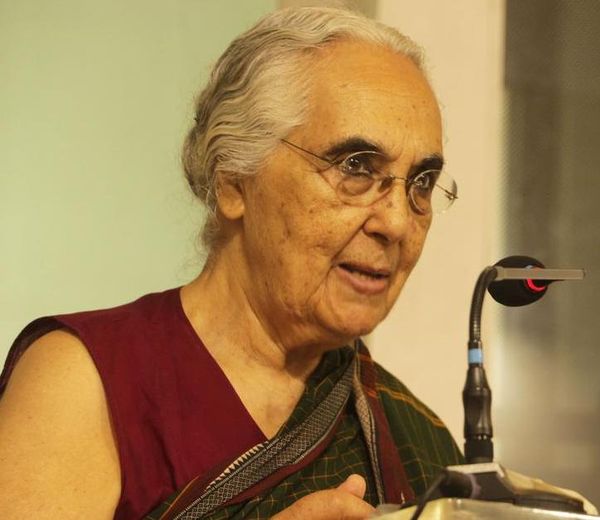
We are immensely proud and privileged to present the P. Govinda Pillai National Award of 2024 to Ms. Romila Thapar, the country’s greatest living historian. We express our deep gratitude to Ms Thapar for illuminating our understanding of the past, the world, and ourselves through her formidable academic contributions and her role as the foremost public intellectual of our times. We also take this opportunity to acknowledge her intellectual leadership in resisting the forces that threaten the idea of India and its core values—secularism, tolerance, equality, and syncretism—that define us. Throughout her career, Ms Thapar has bravely and resolutely faced scurrilous attacks from the Right, both from within India and beyond, often provoked by the power of her thoughts and works. Her courage of conviction is no surprise; even as a child, despite her elite pro-British family background, she chose to admire Mahatma Gandhi and wore Khadi on his advice during the oppressive days of colonialism. The Encyclopedia of Historians and Historical Writing refers to her as the pre-eminent interpreter of ancient Indian history, who has definitively reformulated key questions and deconstructed stereotypes perpetuated by earlier historians with ideological biases. In selecting Ms Thapar for its prestigious Kluge Prize in 2008, the American Library of Congress noted that her works transformed the understanding of Indian traditions from a static view to one that acknowledges the dynamic interplay of political, economic, social, and religious factors. The P. Govinda Pillai Sanskruthi Kendram is deeply honoured by Ms Thapar’s gracious acceptance of our prize, especially given her principled refusals of many celebrated awards in the past, including the Padma Vibhushan on two occasions. This moment is also profoundly emotional for us, as the late P. Govinda Pillai was an ardent admirer of Ms Thapar’s work and played a crucial role in introducing it to Kerala by translating her books into Malayalam. Ms Thapar’s exploration of early Indian history marked a pivotal shift from Indology to recognising history as a social science. She posed new questions, enriched by textual data and archaeological evidence, illuminating early India’s social and cultural history. Additionally, she interrogated historiography, examining how history is recorded in the early past and contemporary contexts. Her books draw from Persian, Arabic, Sanskrit, and Old Tamil texts while integrating insights from folklore, archaeology, and even numismatics, addressing vast sweeps of time, geography, language, and culture. Richard Salomon from Washington University has noted that Ms Thapar is the only living historian of ancient and pre-modern India who has achieved the status of a world-class scholar.
Read more / Official announcement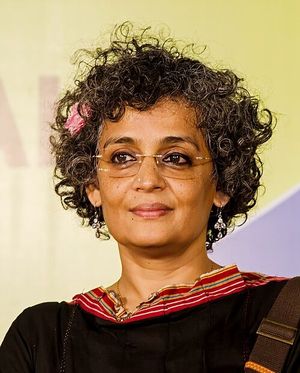
Arundhati Roy holds the embers of a country’s conscience in her heart as it stands at an unprecedented political crossroads today. Throughout a writing career spanning nearly three decades, this creative dissenter has amplified the resistance against various injustices plaguing us as a society. Her repertoire, consisting of both fiction and nonfiction, books and essays, reflects this spirit of alertness and courage. Born in Meghalaya in 1961 to Mary Roy and Rajib Roy, she was educated at Corpus Christi in Kottayam, Lawrence School Lovedale in Ooty, and the School of Architecture and Planning in Delhi. Roy won the Booker Prize for Fiction in 1997 for her debut, The God of Small Things, and the National Award for Best Screenplay in 1989 for the film In Which Annie Gives It Those Ones, which in 2015 was returned in protest against rising violence, censorship and a culture of fear nurtured by the far-right government in India. Roy’s nonfiction explores a range of pressing subjects like nuclear war, environmental destruction, fascism, religious intolerance, communal violence, and more. The Ministry of Utmost Happiness, her second novel published in 2017, is on the lives of people who navigate some of the darkest periods in India’s contemporary history, and her latest work, Azadi: Freedom, Fascism, Fiction, is a collection of essays about the meaning of freedom during growing authoritarianism. We at the PG Foundation thank Arundhati Roy for accepting this award. We also thank her for her brave and relentless campaign through words and deeds in resistance to the dark and ominous forces of our time.
Read more / Official announcement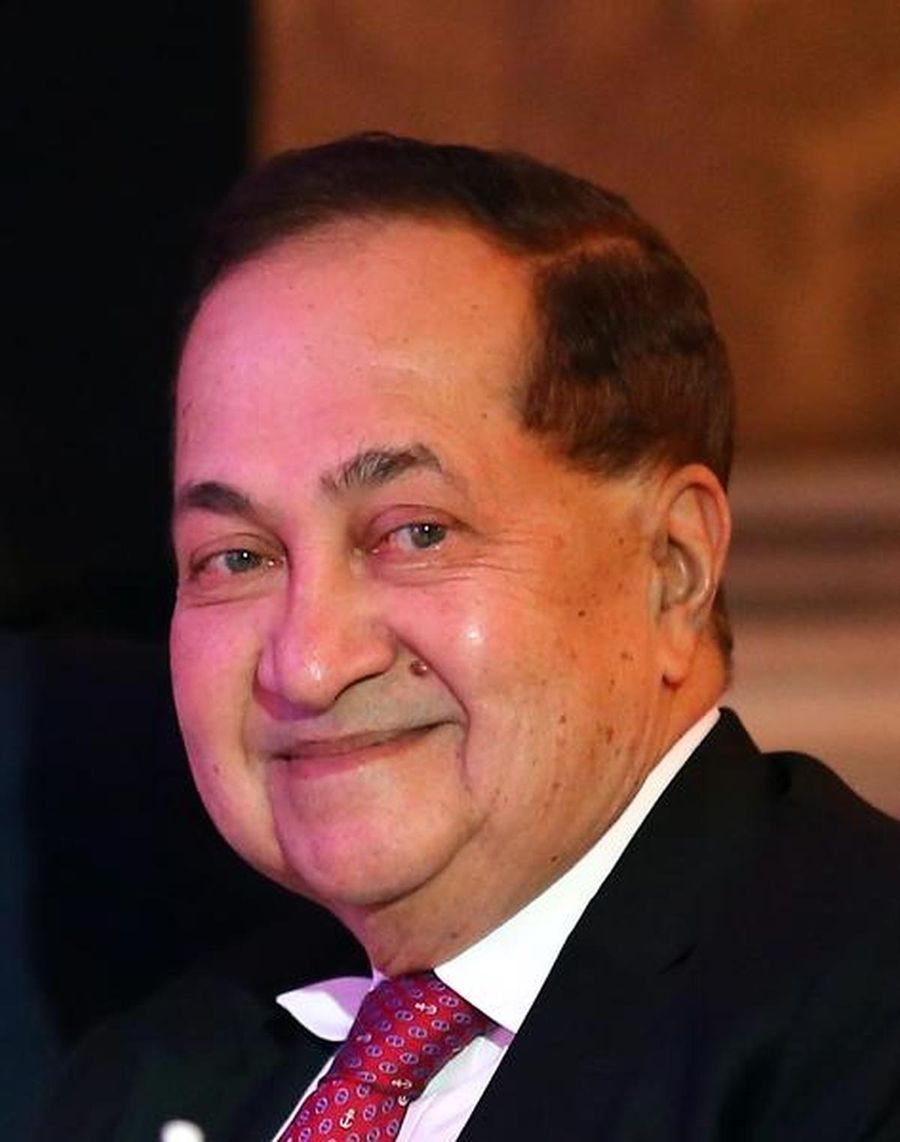
Ram, a good friend of PG, belongs to the illustrious galaxy of journalists who used the noble profession to better the condition of lives around him, challenge vested interests and extend the frontiers of our democracy. He remains a lodestar in contemporary India when these virtues of journalism appear to face extinction. Along with his unflinching commitment to the great values of the profession, Ram has demonstrated high levels of excellence in its practice as illustrated by his path-breaking investigative stories, which belong to the best of their kind in Indian journalism. Ram deserves our appreciation also for having resisted enormous pressures from multiple sources to hold the values that guided him as a responsible professional and concerned human being. Ram is Director of THG Publishing Private Limited, The Hindu Group's publishing company, and has been in the media field since he was 21. He is the former Editor-in-Chief of The Hindu, Frontline, BusinessLine, and Sportstar and the former Chairman of THG Publishing Private Limited. Ram is the eldest son of G. Narasimhan, former Managing Director of The Hindu, and the great-grandson of Kasturiranga Iyengar, the patriarch of the Kasturi family that owns The Hindu Group. After graduating in History from Chennai’s Loyola College, he completed his Masters with the First rank from the Presidency College, Chennai. He has an M.S. in Comparative Journalism, with Honors, from the Graduate School of Journalism, Columbia University. Ram has written and spoken extensively on a wide range of topics like politics, economics, foreign policy, nuclear policy, media, freedom of expression, corruption, abuse of power, communalism, fundamentalism, and sports. He is also one of the most respected authorities on the Sri Lankan ethnic crisis. Ram is the author of many books and research papers on these topics. Ram could be considered one of independent India's most respected investigative journalists. During the late 1980s and 90s, he led The Hindu’s famed investigation into the $ 1.4 billion, Bofors arms deal corruption scandal when Rajiv Gandhi was the Prime Minister. This series was recognized by Columbia University’s Graduate School of Journalism during its centennial celebrations in 2012 as one of the 50 Great Stories by Columbia journalists over the century. In 1980-81, Ram investigated and analyzed the conditionalities of India’s controversial SDR 5 billion Extended Fund Facility (EFF) arrangement with the International Monetary Fund. In early 2019, Ram broke a series of investigative stories on the 7.87 billion euro-Rafale aircraft deal between India and France. This remains one of the very few powerful investigative series into corrupt deals since the Narendra Modi government came to power in 2014. Ram has also made a signal contribution to media education as a founding trustee of the Media Development Foundation and an architect of Chennai’s prestigious Asian School of Journalism. He is a member of the Board of Visitors of the Graduate School of Journalism, Columbia University, New York. That Ram was a state-level cricketer and also a tennis player during his college days is relatively lesser known. Ram has won a litany of honours and awards including the Padma Bhushan for journalism, the Asian Investigative Journalist of the Year Award from the Press Foundation of Asia, the B.D. Goenka Award for Excellence in Journalism; the First JRD Tata Award for Business Ethics. and also Sri Lanka Ratna, Sri Lanka’s highest National Honour conferred on non-nationals. The PG Samskrithi Kendram once again records its great appreciation and respect for Narasimhan Ram, a beacon of hope at a time when journalism and democracy are under siege on an unprecedented scale.
Read more / Official announcement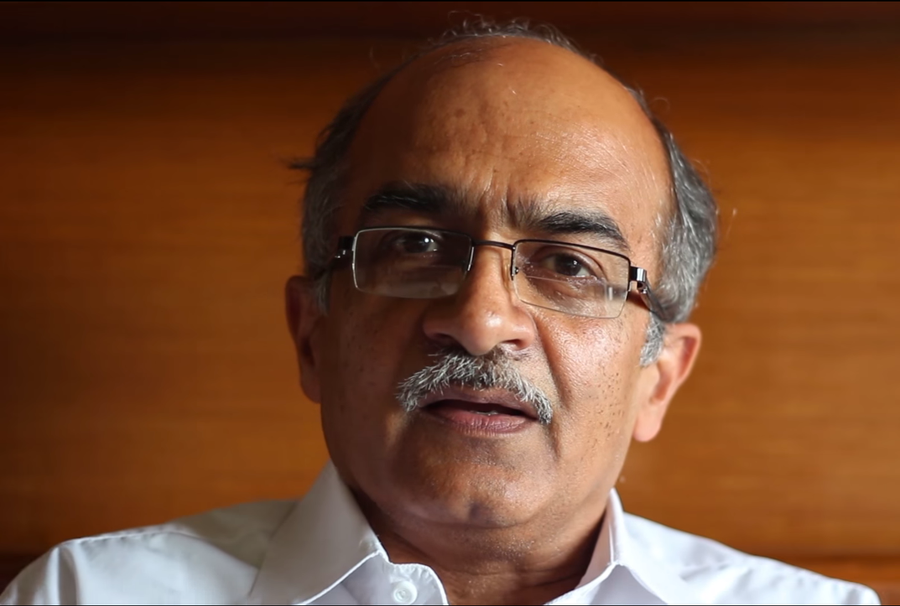
“The world is a dangerous place, not because of those who do evil but, because of those who look on and do nothing” : Albert Einstein He is known as lawyer who takes up “causes” more than “cases”. Prashant Bhushan belongs to a rare species that faces extinction. The species of brave men and women who dare to stand up and speak truth to power. They do this not for themselves but on behalf of all of us. They keep asking relentlessly until they get the answers, whatever be the consequences. They willingly pay a heavy price in the process, yet tread on this less taken path. Bhushan (66) forms one of the last remaining links in contemporary India to a great tradition of public intellectuals and activists who dedicated their lives to fight against every act of wrong doing by the high and mighty. Be it government, judiciary, corporate tycoons, political bigwigs or security forces, Bhushan has been there -often all alone- to raise the flag. He has taken up causes on a wide spectrum of issues ranging from human rights and judicial accountability to corruption, communalism and socio economic rights of the poor and the marginalized. Bhushan took up cudgels for the people both inside courts and on the streets against every murky excess that ravaged contemporary India in the past 4 decades. Bhushan deserves the credit for the way Public Interest Litigation and the Right to Information have been made into effective weapons in the hands of the people. The heavy price he has paid for his dogged commitment included multiple assaults -physical and verbal-, death threats, ostracisation from his fraternity and also repeated attempts -even by legal luminaries- to haul him for Contempt of Court. The objective was to prevent him from exposing the corrosive decay in the judicial system. But he simply refused to budge. Bhushan follows an illustrious family legacy of many who have laid their lives for the sake of public good. His grandparents went to prison fighting for country’s freedom and his famous father was in the forefront to safeguard it when he battled against the Emergency, the authoritarian chapter in independent India’s history. Bhushan has risen up to this tradition from his young years. As a student, he chose to drop out of the much coveted institutions like the IIT and the Princeton University to embark upon his chosen path to become a lawyer. Not because it was a lucrative career, but to dedicate himself for public causes. He pledged and put to practice that majority of the cases he takes up would be of public interest which he would conduct pro bono. He is also one of the rare lawyers who have proclaimed to accept only briefs which would stand the scrutiny of truth and morality. With great pride and pleasure, PG Foundation presents the PG Puraskar of 2021 to Prasanth Bhushan, exceptional lawyer, remarkable author, conscientious public intellectual and uncompromising activist par excellence.
Read more / Official announcement9, Subhash Nagar
Vallakadavu PO
Trivandrum-695008
Kerala, India